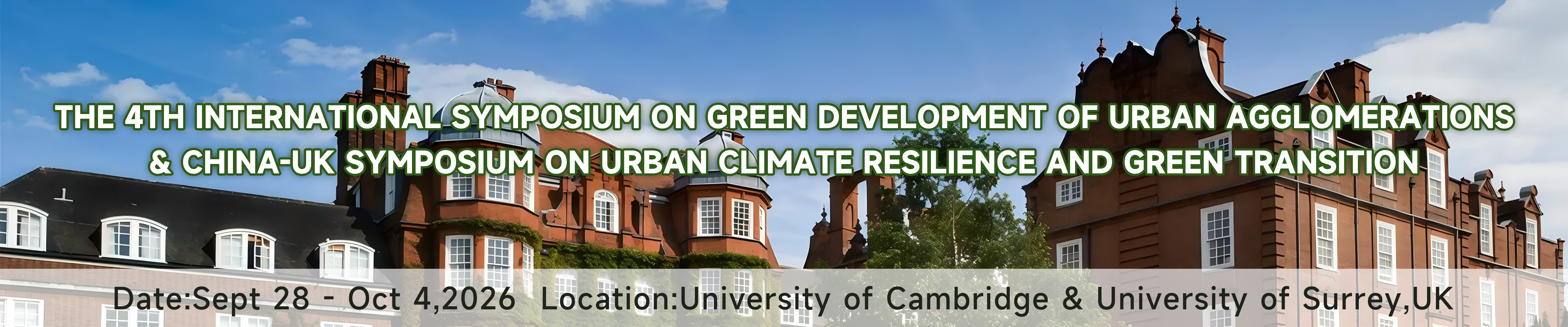
Welcome
Against the dual backdrop of accelerating global climate change and rapid urbanization, urban agglomerations have become the dominant spatial units for population concentration, economic activity, and resource consumption worldwide. At the same time, they are increasingly exposed to compounded pressures arising from surging energy demand, water scarcity, ecosystem degradation, and intensifying climate risks. The growing frequency and severity of extreme climate events, together with mounting constraints on natural resources and environmental carrying capacity, are posing unprecedented systemic challenges to the sustainable development of urban regions.
In this context, advancing green and resilient urban agglomerations has emerged as a central concern in global urban governance. Balancing economic growth with ecological security, strengthening climate resilience, and enabling a coordinated transition toward low-carbon and sustainable development require more than technological solutions alone. Achieving the goals of carbon peaking and carbon neutrality calls for integrated governance approaches at the urban agglomeration scale, including cross-regional coordination, optimized allocation of resources, and policy innovation across sectors and administrative boundaries.
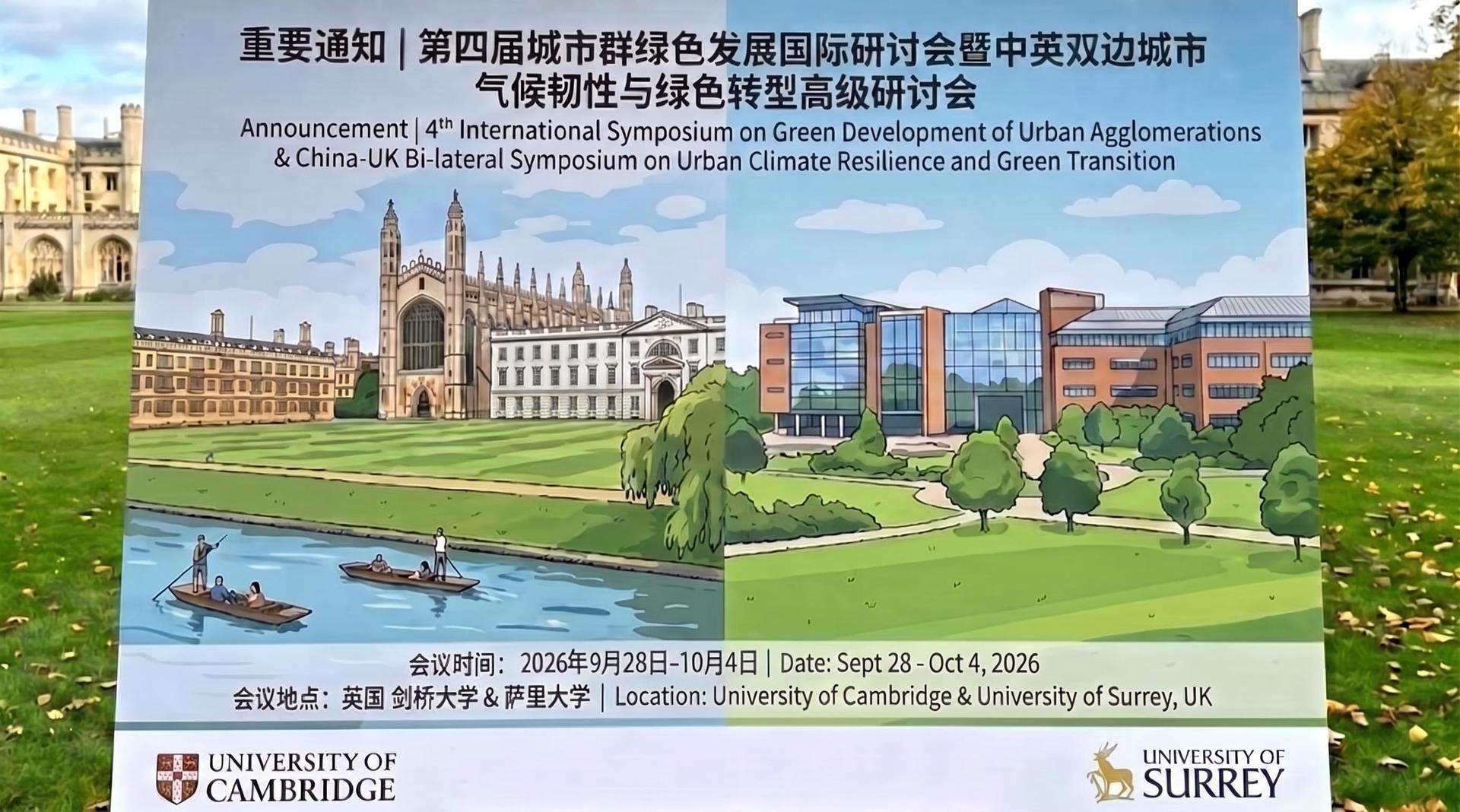
Building on the successful organization and growing international influence of the previous three editions, The 4th International Symposium on Green Development of Urban Agglomerations & China–UK Symposium on Urban Climate Resilience and Green Transition will be held in the United Kingdom in the autumn of 2026. The symposium is supported by the Green Development Committee of Urban Agglomerations of the China Society of Urban Studies, and jointly organized by CEAD, Beijing Normal University, Guangdong University of Technology, together with leading universities and research institutions from the United Kingdom.
The conference will adopt an innovative “dual-city linkage” format, with interconnected events hosted in Cambridge, renowned for its long-standing academic excellence, and Surrey, recognized internationally for its strengths in engineering innovation and sustainability-oriented research. The symposium will address key themes including climate-resilient infrastructure for cities and urban agglomerations, low-carbon and net-zero urban transitions, the water–energy–food (WEF) nexus, and the transformative role of digital technologies and artificial intelligence in green and resilient urban governance.
Through interdisciplinary and international dialogue, the symposium aims to advance theoretical understanding, promote methodological integration, and generate policy-relevant insights. By bringing together leading scholars, policymakers, and practitioners from China, the United Kingdom, and beyond, the conference seeks to deliver robust scientific evidence, practical technical support, and actionable policy guidance to address the complex resource and climate challenges confronting cities and urban agglomerations, while jointly exploring future pathways toward resilient, low-carbon, and sustainable urban development.
During the meeting, the Chinese Academy of Engineering (CAE) and the Royal Academy of Engineering (RAEng) of the United Kingdom proposed to jointly organize special exchange activities for 2026 under the framework of the China-UK Steering Committee for Engineering Technology Cooperation. The initiative will support China’s further integration into the global innovation network and its active engagement in international science and technology governance.
Photo




{{ 'en' == 'cn' ? item.name : item.name_en }}
{{ 'en' == 'cn' ? item.desc : item.desc_en }}